We hear all the time that the family is under attack. We see it plainly all around us, in the glorification of self, the promotion of abortion and artificial contraceptives, and the attempt to normalize disordered relationships and behaviors. The number of fatherless homes is a scandal, though not viewed that way by society at large. This is a tragedy, and those of us who grew up in the security of a loving, traditional family experience deep sorrow at this degradation. There are many who have been deliberately misguided about the family’s value, as evidenced by the decreased number of people marrying, and the increase in deliberate childlessness.
Catholics must be just as relentless in protecting the family as these destructive forces are in sabotaging it. No entity on earth is and has historically been more vocal about the value and dignity of human life and the family than the Catholic Church, and for good reason. As Saint John Paul the Great wrote in his book Love & Responsibility, “The family is the primary institution at the base of our existence as human beings.” Children learn, in the security of the family, how to participate in society. Parents are the primary educators of their children, particularly in matters of faith and morals. “Train up a child in the way he should go, and when he is old, he will not depart from it,” we are admonished in Proverbs 22:6.
Nurturing the family involves prayer, sacrifice, and ceaseless acts of love. It is not glamorous, it is not loud, and it is often difficult, but it is one of the greatest privileges available to us on earth. To be part of a family is a blessing. To raise children within a loving, prayerful family is both a duty and a unique privilege for Catholic parents. The Church offers an abundance of spiritual aids to the Catholic family.
Participation in the sacraments is imperative for a Catholic family. Regular attendance at Mass and frequent confession, time spent in Adoration of the Blessed Sacrament, and daily family prayer are all ways to cultivate closeness to God in children. Modeling proper Mass decorum in modest, respectful dress, and quiet prayerful demeanor can have a long-lasting impact on children attending Mass with their parents. Regular confession not only gives children much needed graces but also teaches humility and discipline. Spending time in Adoration fosters prayer as quiet conversation with our Lord, away from distractions. This time can help form the conscience to better identify God’s calling for our lives.
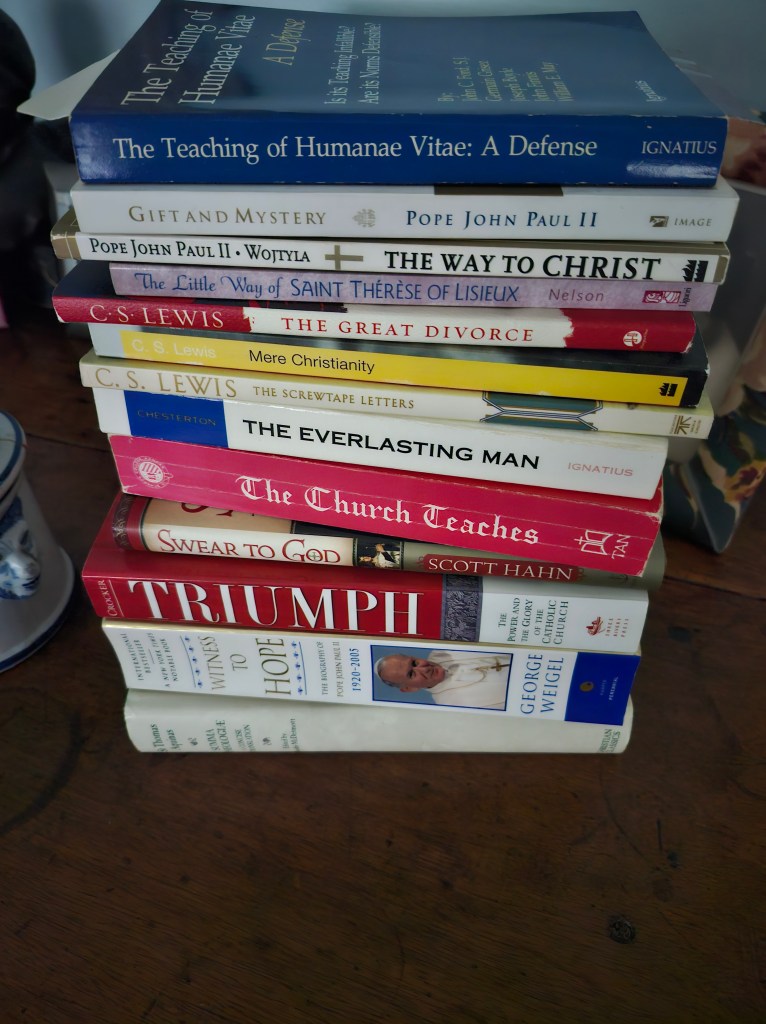
Another tradition that seems to be falling away with the onset of modern technology is reading together as a family. This beautiful experience is a very natural way to teach children long-reaching lessons. When parents read aloud with their children, it is an act of love as well as education. To set aside the time to read with your children communicates to your children that they are important, that time spent together is important. What parents choose to read to/with their children is extremely significant. Reading Scripture and the lives of the saints is an obvious choice and beneficial to children in a Catholic household. Even seeing their parents reading works of theology and other spiritual works impacts children, as it indicates their parents’ desire to grow in holiness and in knowledge of our rich faith.
But families are not going to read only religious tomes together. Any children’s literature will leave a lasting impression on little ones and should be selected with that influence in mind. Is the content wholesome? Does the content reflect and promote the family’s values? Is the content engaging and challenging? Do they train the imagination toward the good and honorable? Will these books cultivate a love of reading? Are they well-written and likely to inculcate a palate for good writing?
I remember constantly reading as a child. I can picture my children’s book of saints and the image of St. Vincent de Paul, who became my favorite saint, because he was French like my father, and he helped the poor. I also vividly recall the moment I learned that I love to read. I was reading The Mouse and the Motorcycle with Papa, each taking turns reading aloud. I came to the passage where Ralph first revs up his bike, and I timidly made an embarrassed “rrrr” sound. Papa admonished “That’s not what a motorcycle sounds like. You have to be loud! RRRRRRRR!!” It clicked in my head that reading could be a lot of fun. I was even blessed to return the favor to Papa when he was bedridden, reading aloud to him to keep him entertained while he recovered from a back injury.
There are many wonderful children’s books for parents to read aloud with their children, but in this raging culture war, families cannot fill their libraries with enough wholesome literature. The Penguin Family: A Collection of Stories for Children is a new book for the family to enjoy together. The book includes ten stories about the Penguin family- Mummy and Papa and their many children, each with a distinct personality. The idea is to highlight the dignity of the individual and the security of the nuclear family, in a subtle, non-preachy way. These are stories for the bright, imaginative children of loving, involved parents. These charming tales are packed with delightful characters and a big, challenging vocabulary. The Penguin Family is best read aloud and designed to get children excited about reading good books.
The culture war over the family is far from over. We must continue the fight, always asking for the intercession of the Holy Family, especially Our Blessed Mother. We as Catholics must promote the nuclear family at every opportunity. As Pope Leo XIV recently declared, the family is “the cradle of the future of humanity.” We must cherish, protect, and uphold the institution. Why not use the arts effectively to reinforce the value of family to our children? The Penguin Family is just one little book in a big battle. But sometimes a little fun helps us prepare for the fight ahead.

 The Drones Book Club
Leave a comment